Drayage Operators Are the Pilot Program for California’s Zero Carbon Trucking Regulations
By Pierson Gruettner
Published January 17, 2023
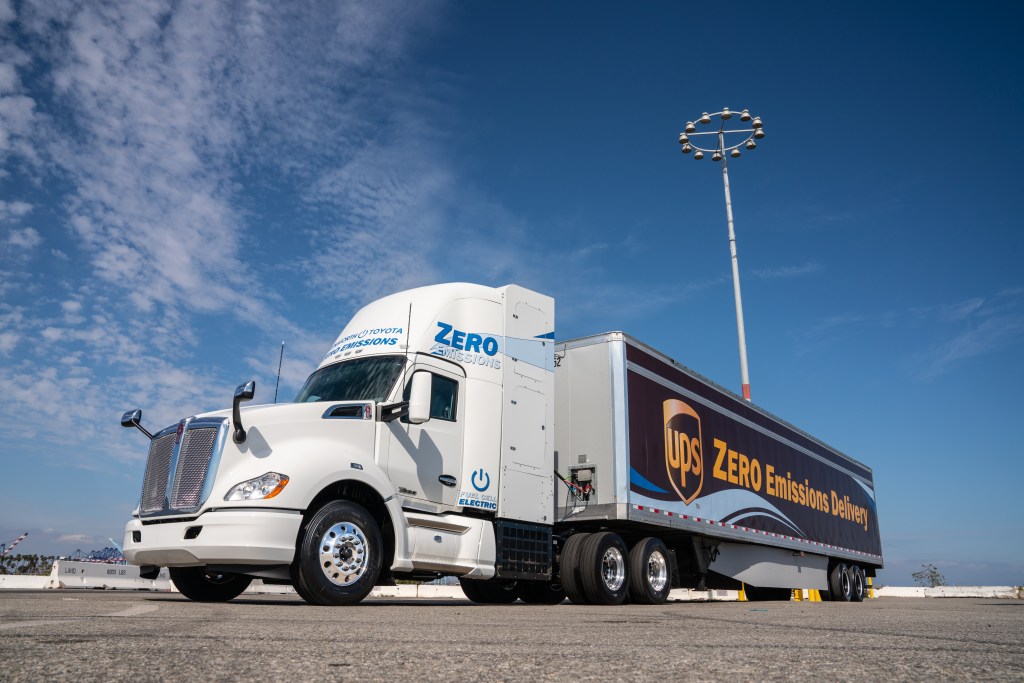
California has goals to reach zero carbon emissions and is targeting the trucking industry in an attempt to reach that goal. In order to do this medium and heavy duty trucks will need to be electric, or alternative fuels, but the industry leader is electrically operated vehicles.
The trucking industry moves 10.23 billion tons of freight annually, or 72.5% of total domestic tonnage shipped in the United States. California ports account for 40% of the total containerized cargo entering the US. and nearly 30% of the nation’s exports. Trucking is a vital part of the United States supply chain, and California plays a huge role in the nation’s supply chain.
The high volume of freight moving through California accounts for 70% of the smog-causing pollution and 80% of the carcinogenic diesel soot by the 2 million medium and heavy duty trucks of the 30 million registered vehicles in California. In 2020 the Governor of California signed into effect Executive Order N-79-20, which requires 100% of in-state sales of new passenger cars and trucks to be zero-emission by 2035, and 100% of in-state medium and heavy-duty vehicles to be zero-emission by 2045.
These new regulations are years away, but starting January 1, 2023 trucks must have a 2010 model year engine or newer to enter California ports and rail yards, but some Regional air-quality boards are even more strict limiting trucks to no older than three years. The Region targeting strategy is directed towards Drayage trucks. This will force Drayage trucks to be the first to become electric, since they do not travel long distances, and need less time for fueling, or less time for charging. On January 1, 2024, all new Drayage trucks sold in California will need to be zero-emission.
Trucking companies in California are worried about the impact these regulations will have on the industry. The first concern is the lack of charging stations, where the electricity for the charging stations will come from, and if California will be able to supply enough electricity to the charging stations. California is notorious for its “rolling blackouts.” California is offering a discount incentive program for truckers that buy new electric trucks, but truckers argue they are being forced to buy and replace trucks that are in good operational condition, and the discount incentive doesn’t outweigh the cost of replacement.
Drayage operators in Los Angeles are predicting container recovery from the Ports of California to be drastically delayed as the new regulations take effect, and as the effective date is less than a year away their predictions may come true.
Sources
Supply Chain Watch. (n.d.). American Trucking Associations. https://www.trucking.org/supplychain
Overview of California’s Ports. (n.d.). Lao.ca.gov. https://lao.ca.gov/Publications/Report/4618
California takes bold step to reduce truck pollution | California Air Resources Board. (n.d.). Ww2.Arb.ca.gov. https://ww2.arb.ca.gov/news/california-takes-bold-step-reduce-truck-pollution
A Guide to California’s Clean Air Regulations for Heavy-Duty Diesel Vehicles. (2020). https://ww2.arb.ca.gov/sites/default/files/truckstop/pdfs/truck_bus_booklet.pdf
CARB approves updated regulations requiring most new small off-road engines be zero emission by 2024 | California Air Resources Board. (n.d.). Ww2.Arb.ca.gov. Retrieved January 17, 2023, from https://ww2.arb.ca.gov/news/carb-approves-updated-regulations-requiring-most-new-small-road-engines-be-zero-emission-2024#:~:text=First%2C%20for%20model%20year%20(MY
“Kenworth/Toyota Fuel Cell Electric Truck (FCET)” by TruckPR is licensed under CC BY-NC-ND 2.0.
 Pierson Gruettner