China’s Latin America Manufacturing Response to Section 301 Tariffs
By Pierson Gruettner
Published August 8, 2023
The implementation of Section 301 Tariffs on goods destined to the United States from China has forced China to find new locations to manufacture to minimize or avoid the additional tariffs. China has begun to utilize Latin American countries as manufacturing hubs. China is investing in Mexico as a manufacturing partner to utilize Mexico’s Free Trade Agreement (FTA) with the United States through USMCA.
Many Chinese manufacturers are already taking advantage of selling directly to the end user through e-commerce sites to avoid US Duties through a de minimis rule (19 CFR 10.151), which allows for shipments to enter Duty Free under an informal entry for shipments valued no more than $800 as long as the goods are packaged and addressed to individual buyers.
Chinese manufacturers are taking duty avoidance strategies further by moving their manufacturing locations to Mexico. One company project, the Hofusan Industrial Park, is building a location that will encompass all the amenities of a small town.
The industrial park is being built 13 miles away from Monterrey, Mexico and 124 miles away from the nearest Port of Entry into the United States: Laredo, Texas. Goods crossing the Laredo Port of Entry will be in a geographic central location for further distribution within the US from other hubs such as San Antonio and Houston. The park will focus on some of the hardest hit industries from the Section 301 Duties: recycled energy (solar panels), electronics (specifically the brand Hisense), mechanical equipment, and auto parts.
The vision for Hofusan Industrial Park is to have everything an employee needs to live and work without ever needing to leave the parameters of the park. However, it will also be able to utilize cheap local labor.
Chinese investment into manufacturing hubs in Mexico isn’t only limited to the benefit of Duty avoidance through USMCA, but it is also a shorter transit route to the US than from mainland China, and Mexico has 10 free trade agreements and 49 preferential treatments with other countries. China is hoping to capitalize on these agreements and is constructing 40 additional ports in Mexico.
China isn’t limiting their manufacturing expansion with Mexico but is partnering with additional Latin American countries (Brazil, Cuba, Paraguay, Peru, Venezuela, Ecuador, Chile and Argentina) through their Belt and Road Initiative and is investing heavily in Latin American countries infrastructure and land purchases.
There could be a transactional currency change between China and Latin America from US Dollars to BRIC’s (Brazil, Russia, India, and China) currency, which is backed by a Gold Standard like the United States Dollar was until 1933 and completely abolished in 1973. The forced partnership with Latin America through loophole tactics by China in response to additional tariffs could lead to a closer relationship between the US’s neighbors to the South and China.
Canada has also expressed interest in accepting BRIC’s currency, and Mexico has expressed interest in joining BRIC’s. It will be interesting how the United States will respond, and if it will impact USMCA.
Sources
https://www.dallasfed.org/research/swe/2023/swe2303
https://eurasiamedianetwork.com/mexico-plans-to-join-brics-amid-growing-tensions-with-us/
https://www.bakerinstitute.org/research/will-new-chinese-investment-mexico-benefit-north-america
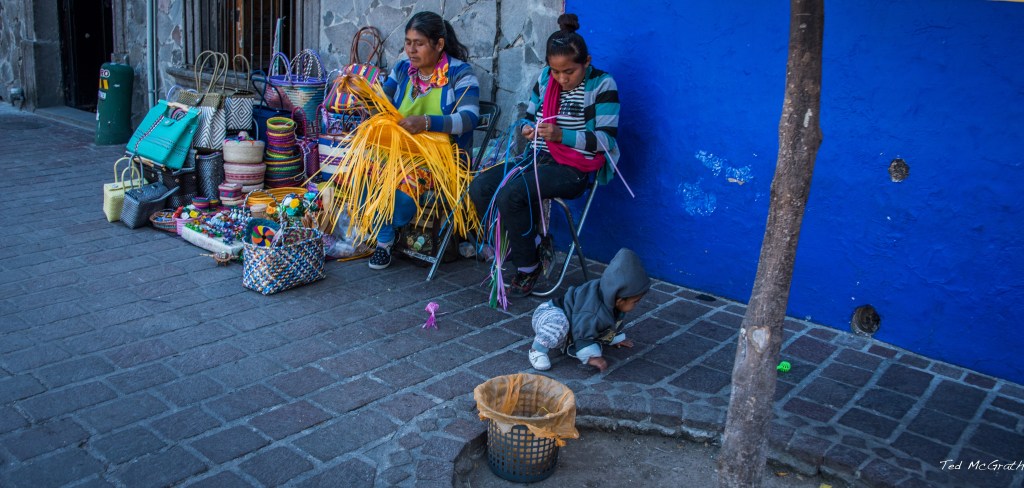
“2017 – Mexico – Tlaquepaque – Street Manufacturing” by Ted’s photos – For Me & You is licensed under CC BY-NC-SA 2.0.
 Pierson Gruettner